I Switched to the Hohem Isteady Mt3 Pro and Here is What Happened
Introduction to a New Standard in Compact Stabilization
The landscape of content creation has shifted dramatically over the last several years. No longer are creators solely defined by the equipment they carry; instead, they are defined by their agility and their ability to capture high-quality footage across multiple platforms. In this pursuit of versatility, the choice of a gimbal becomes more than just a buying decision—it becomes a foundational part of the workflow. The transition from traditional, single-purpose stabilizers to the Hohem iSteady MT2 or the more advanced MT3 series represents a pivot toward a more integrated style of filming. The Hohem iSteady MT2 Pro, often discussed alongside its successors, set a high bar for what a "4-in-1" stabilizer could achieve. Moving to the Hohem iSteady MT3 Pro is an experience that underscores the rapid evolution of motor torque, AI integration, and ergonomic design.
For many videographers, the switch to the MT3 Pro isn't just about getting smoother shots; it is about solving the persistent headache of switching between a mirrorless camera, a smartphone, and an action camera while on location. Most gimbals in the mid-size category force a compromise: they are either too small to handle a decent lens on a mirrorless body or too large to be portable for smartphone vlogging. The Hohem iSteady MT3 Pro aims to occupy that "Goldilocks" zone. This article explores the deep technical nuances, the real-world performance shifts, and the long-term implications of integrating this specific piece of hardware into a professional or enthusiast camera kit.
The Technical Architecture of the MT3 Pro
When diving into the hardware, the first thing one notices upon switching is the build quality. The MT3 Pro utilizes high-grade aluminum alloys that provide a rigid frame without the prohibitive weight of cinema-grade stabilizers. The motor architecture is where the "Pro" designation truly earns its keep. With upgraded brushless motors, the device offers a significant increase in payload capacity compared to earlier iterations in the iSteady line. This increase in torque is vital because it allows for "imperfect" balancing. While any professional knows that a well-balanced gimbal performs better, the reality of run-and-gun filmmaking often means you need to swap a lens or add a filter without spending ten minutes re-calibrating. The MT3 Pro handles these minor weight shifts with impressive stability.
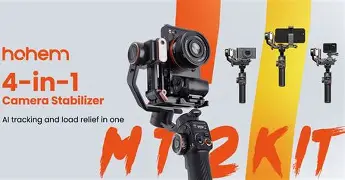
One of the standout features that defines the experience of using this gimbal is the Quick Release system. The Multi 4.0 Quick Release System is designed for speed. It allows for a seamless transition between horizontal and vertical shooting modes—a necessity in an era where YouTube content and TikTok/Reels content must often be shot simultaneously. Unlike older systems that required unscrewing plates and remounting the entire camera assembly, the MT3 Pro utilizes a specialized bracket system that feels secure and clicks into place with tactile precision.
The AI Tracker and Magnetic Fill Light
Perhaps the most significant change for those switching from traditional stabilizers is the inclusion of the AI vision sensor. This is not just a gimmick; it is a shift in how solo creators operate. Typically, tracking requires an app-based connection that uses the smartphone's processing power to track a face. The Hohem MT3 Pro utilizes an independent AI tracker that connects magnetically to the top of the tilt motor. Because the AI "brain" is external to the camera, it can track subjects regardless of whether you are using a Sony A7IV, an iPhone, or a GoPro. This independence is a game-changer for solo vloggers who need the gimbal to follow them while they move through a scene without having a dedicated camera operator.
The integrated fill light also deserves mention. It isn't just an "emergency" light; it offers adjustable CCT (Color Correlated Temperature) and RGB modes. For creators working in challenging lighting conditions—such as blue hour or dimly lit interiors—having a small, powerful light source that is already powered by the gimbal's battery simplifies the gear list significantly. It reduces the need for cold-shoe extensions and extra batteries, further leaning into the philosophy of streamlined production.
Real-World Performance: What Actually Happens on Set
Switching to the MT3 Pro reveals its strengths most clearly during long shooting days. The ergonomics of the handle have been refined to reduce wrist strain. The joystick sensitivity is customizable, allowing for slow, cinematic pans or fast, aggressive tracking. During a recent field test involving architectural videography, the gimbal’s "Inception Mode" (360-degree barrel roll) performed with a smoothness that rivaled much more expensive professional rigs. The motor noise, or lack thereof, is also a critical factor. Even when working with sensitive on-camera microphones, the hum of the MT3 Pro motors remains negligible, which is a testament to the high-quality sine wave control algorithms used in the firmware.
Connectivity is another area where the switch felt impactful. The gimbal supports shutter control for most major camera brands via both cable and Bluetooth. Being able to trigger recording or adjust focus (on supported models) directly from the gimbal handle minimizes the need to touch the camera body, which in turn prevents micro-jitters in the footage. For those using smartphones, the integration with the Hohem Joy app provides a suite of creative templates, though the gimbal remains perfectly functional as a "dumb" stabilizer for those who prefer to stay away from app-heavy workflows.
Discover deals on Cameras & Photography — updated daily.
View Offers →Pros and Cons Analysis
No piece of equipment is perfect, and the switch to the Hohem iSteady MT3 Pro comes with its own set of trade-offs. While the benefits often outweigh the drawbacks for the target demographic, a balanced view is essential for anyone considering the transition.
The Advantages (Pros)
- Universal Compatibility: The ability to carry one gimbal for a mirrorless camera, smartphone, and action camera greatly reduces bag weight and setup complexity.
- Independent AI Tracking: The magnetic AI sensor works across all devices without needing a Bluetooth link to the camera’s internal software, providing freedom and reliability.
- Vertical Shooting Optimization: The quick-switch bracket is arguably one of the best in the industry for creators who pivot between landscape and portrait formats.
- Payload-to-Weight Ratio: It handles surprisingly heavy setups (like a Sony A7C with a 24-70mm lens) while remaining compact enough to fit in a medium-sized backpack.
- OLED Display: The integrated screen provides clear feedback on battery life, mode status, and connection, which is much better than relying on blinking LED codes.
- Battery Longevity: The energy management is efficient, often lasting through a full 8-10 hour day of intermittent shooting, and it supports reverse charging for the camera.
The Challenges (Cons)
- Learning Curve: The sheer number of modes (PF, PTF, L, POV, All Follow) and the menu system on the small OLED screen can be overwhelming for beginners.
- Balancing Sensitivity: While the motors are strong, the initial balance for large mirrorless cameras requires precision to avoid vibration at certain angles.
- AI Sensor Size: While magnetic and convenient, the AI sensor is small and could easily be misplaced if not kept in its dedicated carrying case slot.
- App Dependency for Firmware: To get the most out of the motor tuning and newest features, you must periodically connect to the mobile app, which some professionals find tedious.
Comparison with Industry Competitors
To understand where the Hohem iSteady MT3 Pro sits in the market, it is helpful to compare it against other popular "compact-pro" gimbals. The following table highlights how it stacks up against generic competitors in the same weight class.
| Feature | Hohem iSteady MT3 Pro | Standard Compact Gimbal | Pro-Level Large Gimbal |
|---|---|---|---|
| Device Support | 4-in-1 (Camera/Phone/Action) | Multi-device (Limited Payload) | Camera Only |
| AI Tracking | Independent Magnetic Sensor | App-based only | External Module (Additional Cost) |
| Vertical Mode | Integrated Quick Switch | Manual Re-mount | Requires Extra Plate |
| Payload Capacity | Up to 1.2kg (approx.) | Up to 0.9kg | Up to 3.0kg+ |
| Weight | Lightweight / Travel-ready | Ultra-light | Heavy / Requires Support |
Comprehensive Buying Guide: Is the Switch Right for You?
Deciding to switch to a new gimbal like the MT3 Pro requires an honest assessment of your current creative hurdles. If you find yourself leaving your gimbal behind because it is too heavy, or if you find yourself missing shots because balancing takes too long, the MT3 Pro is likely a justifiable upgrade. However, there are specific factors you should consider before making the leap.
Assessing Your Camera Payload
The MT3 Pro is designed for compact mirrorless setups. If you are shooting with a Sony Alpha, Fujifilm X-series, or Canon R-series with prime lenses or small zooms, you are in the perfect range. However, if your primary setup involves a Full Frame body with a "G Master" or "L-series" 24-70mm f/2.8 lens, you may be pushing the limits of the motor's center of gravity. Always verify the total weight of your camera plus the specific lens and any mounted microphones before assuming a compact gimbal will suffice.
The Importance of Vertical Content
If 50% or more of your work is destined for social media platforms like Instagram or TikTok, the MT3 Pro is a top-tier choice. The industry has moved away from "hacking" horizontal gimbals to shoot vertically. The native support for portrait orientation in the MT3 series ensures that the motors aren't stressed and the range of motion isn't restricted when the camera is flipped. This is a critical consideration for commercial creators who need to deliver both 16:9 and 9:16 assets from the same shoot.
Solo Creators vs. Production Teams
The AI tracking feature is specifically engineered for the solo operator. If you work in a team where someone is always behind the lens, you might not value the AI sensor as much. But for the "one-man-band" filmmaker, the ability to set the gimbal on a tripod, perform a gesture to start tracking, and know that the frame will follow you as you demonstrate a product or walk through a space is invaluable. The gesture control system (OK sign to start, palm to stop) adds a level of autonomy that changes how you script your videos.
Vlogging and Audio Considerations
Because the MT3 Pro is compact, it leaves plenty of room for audio accessories. When switching to this gimbal, look at how you mount your wireless receivers. The abundance of 1/4-inch screw holes on the handle and the arm allows for the attachment of cold shoe adapters. This means your Rode Wireless GO or DJI Mic receiver can sit comfortably without interfering with the gimbal's rotation. This attention to "the ecosystem" of the creator is what separates modern gimbals from the early generations of stabilizers.
Find top-rated Cameras & Photography products at great prices.
Shop Amazon →Advanced Operational Tips
After switching to the MT3 Pro, there are a few "pro-tricks" that can maximize the quality of your output. First, utilize the "POV Mode" for immersive, first-person style shots. In this mode, all three axes follow the movement of the handle, allowing for tilted, dynamic shots that feel more natural than the robotic "Pan-Follow" mode. This is particularly effective for travel videography where you want the viewer to feel the movement of the camera through a crowded market or a narrow trail.
Second, take advantage of the "Sport Mode." By holding the trigger button, the motor response becomes near-instantaneous. This is essential for capturing fast-moving subjects, such as a skateboarder or a pet. Many users forget this feature exists, but it is the key to preventing the "laggy" look that occurs when a gimbal tries to smooth out a movement that was intended to be sharp and aggressive.
Finally, consider the calibration. Even though the MT3 Pro is rugged, a "Six-Side Calibration" performed once a month via the app ensures that the gyroscopes remain perfectly aligned. This prevents the "drifting horizon" issue that plagues many lower-end stabilizers. If you notice your camera is slightly tilted after a long flight or a bumpy car ride, a quick calibration will bring it back to a perfect level.
Conclusion
The switch to the Hohem iSteady MT3 Pro marks a significant milestone in the democratization of high-end stabilization. What was once the domain of those carrying heavy, expensive, and temperamental equipment is now accessible to anyone with a mirrorless camera and an eye for composition. The integration of independent AI tracking, high-torque motors, and a truly universal mounting system solves the most common frustrations faced by modern "hybrid" creators.
What happens when you switch is a quiet realization that the technology has finally caught up to the pace of content creation. You spend less time wrestling with locks and screws and more time thinking about lighting and storytelling. The MT3 Pro doesn't just stabilize the camera; it stabilizes the workflow. By offering a platform that accommodates almost any small-to-medium camera device, it eliminates the need for multiple specialized tools. While the learning curve for the advanced modes requires some patience, the payoff is a level of production value that was previously unattainable for solo filmmakers. In the end, the MT3 Pro stands as a powerful testament to how refined, user-centric engineering can empower the next generation of visual storytellers.